
Alittleb.it goes to IGDS

Alittleb.it è stata invitata all’IGDS, il più importante summit italiano dedicato allo sviluppo di videogames, questo Sabato 25 Ottobre alle ore 11:30 durante la sessione Play Different per presentare le ultime novità del mondo del videogames, della gamification e dell’e-Learning.

Alain Bonati, il Marketing Manager, Alittleb.it & DarkWave Games, coinvolgerà la platea presentando Skillato, la piattaforma più innovativa del mercato per l’e-Learning all’interno dell’impresa, grazie alla quale è possibile perseguire l’obiettivo di aumentare i Talenti dell’impresa attraverso una soluzione integrata che utilizza Gamification, Storytelling e innovativi strumenti interattivi.
L’incontro, dedicato alla piattaforma per la formazione a distanza, mostrerà le caratteristiche e le potenzialità di Skillato, soluzione già in uso con successo dai gruppi Allianz e Genialloyd.

La terza edizione dell’IGDS sarà ospitata all’interno della manifestazione Milano Games Week! presso il MiCo (Milano Congressi). Entrata MiCo vicino al GATE 4 (Viale Scarampo corner Viale Colleoni).

Destination Vodka Facebook Game


Project name: Destination Vodka
Category: Facebook App – Game
Client: Keglevich
Agency: Evolution People
Technologies: Flash, Ruby on Rails, Amazon Cloud
Primary Target: Keglevich’s consumers and Facebook’s users
Main Target Device: Web Browser – Facebook


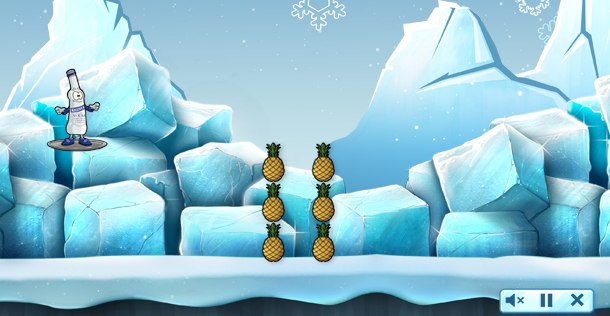
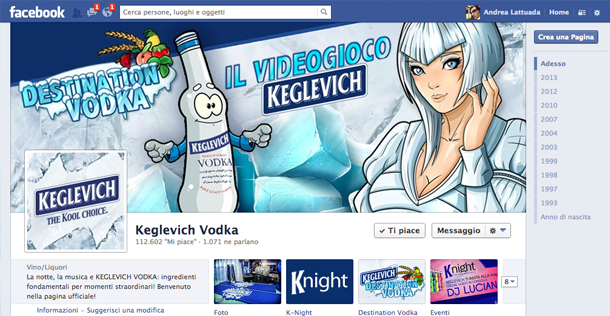
Alittleb.it has developed for Keglevich the Facebook game named “Destination Vodka”.

The application reflects the dynamic and modern style of Keglevich’s Vodka communication.
Along the six carefully designed levels, users can test their skills immerging in the game thanks to his storytelling similar to a comic.

The use of Ludum technology, alittleb.it’s tool for rapid development of small Social Games, made us possible to create an application within Facebook where users have the opportunity to unlock achievements and badges, challanging other users or friends in a competition to obtain the highest score for each of the six levels.

Users can invite their friends generating a viral circle for the app, exposed to a wider audience. The use of the Ludum technology gives the ability to easily replicate the technical basis of the application, adapting it to the context in which is inserted, so it’s easy to create similar experiences for other companies interested in developing similar applications to fuel their brand awareness and optimize their in-game ADV.

big_keglevich_2


big_keglevich_3


big_keglevich_4


Bat Pat: Monsterelp


Project name: Bat Pat – Monsterelp
Category: Multiplatform Game for Cross-media communication strategies
Client: Atlantyca Entertainment
Technologies: Unity3D and our tool “TileWAVE”
Primary Target: Kids (5-15 anni)
Secondary Target: Smartphone Owners
Main Target Device>: iPhone 3GS – 4S; iPad 1 – 3; Samsung Galaxy S, S2, S3, Note, Tab 10.1, Nexus; PC e MAC; browser version.


Bat Pat: Monsterelp Introduction

What do you get when you take one very heroic bat in the world’s most creepy place? The Monster-Help!

A mummy who cannot sleep? An ogre with love problems? A vampire who has lost his teeth? No problem: here it’s Bat Pat!

Drag Bat Pat through 30 different levels in three creepy locations, avoid the traps and discover all his super powers!
Because the monsters don’t really want to hurt anyone. In fact, what they really want is… help. Drive them out from every room and solve their problem… But watch out, don’t get too closed to them!

Bat Pat Monsterelp: just for brave players!

Vodafone E-learning Game Experience


Project name: Vodafone Supermobile
Category: E-learning Game; Gamification / Serious Games / ARG; Internal Communication
Client: Vodafone Italia
Technologies: Ludum; HTML5, Actionscript 3.0; Ruby On Rails
Target: Vodafone Italia’s 8.000 Employees


Alittleb.it has conceived and created an alternate reality game, developed for Vodafone’s employees, in order to teach smartphones’ technologies.

The e-learning game was developed by the exploitation of LUDUM: an alittleb.it’s platform designed and developed to ensure a unified, complex but immediate gaming experience.

Alittleb.it opted for a strategy that involved interactive and experiential learning, maximizing the element of fun to promote the interest and the active approach of Vodafone employees.
The gamified experience takes place at the same time on pc browsers, smartphones’ screens and in the real world, creating real offline experiences into Vodafone’s offices.Read More

SeatPG’s Productivity Game


Project name: WebPoint Village
Category: Productivity Game; Gamification / Serious Games; Internal Communication
Client: Seat PG
Technologies: Ludum; UnderWave
Target: Seat Pagine Gialle’s Sales Agents


Alittleb.it designed and developed WebPoint Village, a productivity game for iPad, dedicated to the entire sales force of Seat PG.

DESCRIPTION:
Alittleb.it set up a solution for Seat PG to increase the sales performance using gamification; the solution is specifically addressed to all the Seat PG’s sales staff (1,400 people).
WebPoint Village belongs to the category of Serious Games and has been conceived as a project of medium / long term (3 years), with a structure very similar to CityVille and Millionaire City.
SeatPG’s agents gain city’s resources reaching their period’s sales objectives.

Read More

Go To Jupiter: E-learning Game for Employees


Project name: Go To Jupiter
Category: E-learning; Gamification / Serious Games; Internal Communication
Client: Astrazeneca
Technologies: Ludum; Flash – ActionScript 3.0, PHP
Target: AstraZeneca sales force


Go To Jupiter is a Game Based Learning Solution, used to teach to 500 agents about a new medicine.
Astrazeneca’s agents have to earn points to be the first to reach a Stadium (which represents the official launch event of the medicine and where agents, answering questions using a remote control, can earn new points to improve their game ranking).
In the web game, agents can get points by answering quiz and playing different mini-games focused on the features of a new product.

Alittleb.it has developed the game and conceived the concept and the entire game-experience. Our partner MCA Group has produced the graphics and it has organized the launch event.

Go To Jupiter has been developed using our Social Game Platform – Ludum.
Read More

Social Games and Rewards

The Social Games work with a “effort-reward” system, generating what is called “compulsion loop,” or “engagement loop”: when a player gets a small reward for each action performed, he will be motivated to act continuously, in a “gratification loop”, or a “involvement loop”.Read More

Behavioral Design

Videogames are designed around a core element: the player. The player’s role is to carry out actions aimed to get a reward, within the limits set by rules of the game. John Hopson has coined it “contingencies“: a set of rules under which the player acts, getting rewards and reinforcements. Experiencing different ways of rewards, different patterns of player’s response can be found.Read More

Privacy Settings
We use cookies to enhance your experience while using our website. If you are using our Services via a browser you can restrict, block or remove cookies through your web browser settings. We also use content and scripts from third parties that may use tracking technologies. You can selectively provide your consent below to allow such third party embeds. For complete information about the cookies we use, data we collect and how we process them, please check our Privacy Policy
Youtube
Consent to display content from - Youtube
Vimeo
Consent to display content from - Vimeo
Google Maps
Consent to display content from - Google